Monday, June 20, 2011

Miss Barbara Kent


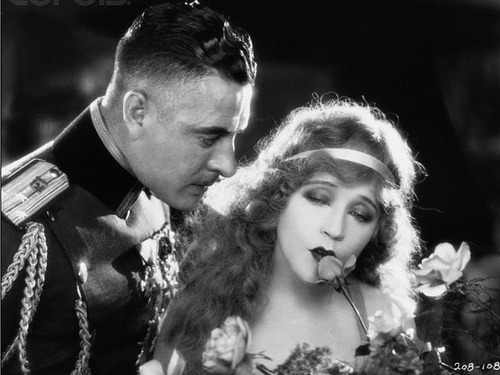
Let's start with the fact that this woman is still alive. Seriously. Barbara Kent is the last surviving star of the silent era. How cool is that? The sad/kinda understandable part is that she does not talk about her film past and doesn't grant interviews. It is sad because she has so much history in her to speak about, but the woman is 104, so we can grant her some peace.


Thinking of Barbara makes me sad that I never had a chance to meet Doris Eaton. She lives in Michigan, where I live, and she only just died a year ago. I didn't even realize that I could have gone to her funeral until I went to the cemetery to visit her and the woman working in the office told me about the beautiful memorial service. Grrr! Oh well. I tell you what, when I get to heaven, I will be talking to every one of my idols....if I can pull myself off Buster that is.


Barbara Kent was born Barbara Cloutman on December 16, 1906 in Gadsby, Alberta, Canada. Her parents were Jullion and Lily Cloutman.

She won a Miss Hollywood contest when she was 21, and made her film debut that same year (1925) in a small role. She got her first billing in 1926's The Flesh and the Devil.

Because of her small height (she was shorter than 5 feet), she was mainly cast in light comedy roles, but could hold her own against screen dynamos like Greta Garbo.

She stirred some scandal when she appeared in the 1927 film No Man's Law because it contained a "nude" scene. In fact, Barbara was wearing a flesh colored bathing suit to simulate nudity. But even the simulation that she was naked caused quite a stir. It worked out in her favor though because later that year she was named a WAMPAS Baby Star.


Unlike some of her screen co-stars, Barbara made a smooth transition to the talkies, appearing with another silent film veteran, Harold Lloyd.

She made her last film in 1935. She had previously taken a break from working and it caused the public to pretty much forget about her and move on to new talking stars. She tried to jump start her career again, but it sadly did not work out.

Barbara has only been married once, to agent and producer Harry Edington in 1932. The marriage lasted until his death in 1949. It was after his death that she faded completely from the public eye and chose to live a quiet life in Idaho (I thought I heard a rumor that she married again, but I don't have any information on that).

Barbara and Gloria Swanson

Her fellow 1927 WAMPAS Baby Stars included Helene Costello, Ada Mae Vaughn, Sally Rand, Martha Sleeper, Natalie Kingston, and Gladys McConnell.

We all still love you Barbara. You are a beautiful lil lady and I hope you are enjoying your 104 years. Quite the accomplishment! You will live forever in the hearts and minds of the silent movie lovers out there.


Friday, June 3, 2011

Mr. Douglas Fairbanks


Another great example of "They don't make them like this anymore." Nowadays the action heroes are huge muscle heads who bash people's heads in or shoot them or stab them, set them on fire, whatever (Don't get me wrong, I love me some Jason Statham). But, Doug was an action hero without the explosions and blood and gore, and without words! He was so dashing and dreamy, and had the most amazing smile. He always looked like he was having the time of his life when he was on film. Another great/funny thing about him was his "healthy" tan. That man was DARK!! But, he was good looking, so oh well. And he has one of the coolest graves ever. In my mind, all the silent film stars should have huge memorials like his, because to me, they were/are larger than life.

Douglas Fairbanks was born Douglas Elton Thomas Ullman on May 23, 1883 in Denver, Colorado. His father, Hezekiah, was a lawyer and his mother, Ella. He had an older brother, Robert and a half brother and a half brother (through his mother) named John. Because their father abandoned the family when Doug was only 5, his mother gave them the last name of Fairbanks, after her first husband.

Doug began acting early and was in stage productions all through his high school years, but he left school during his senior year. He moved to New York City in 1900 and appeared on small stages until he made his Broadway debut two years later.

In 1915, he signed with D.W. Griffith and appeared in his first film called The Lamb. Already he was showing great panache as an athletic actor, but Griffith wasn't too happy about this persona, so he had Doug appear in more romantic comedy type roles. This lead to Doug opening his own production company before being signed to Paramount studios. He was one of a handful of stars who also had good business sense, so he was able to make bank while making movies.

A few years later, Doug joined fellow actors Charlie Chaplin and Mary Pickford (his lil girlfriend at the time, but we shall get to that) on a war bond drive. They traveled by train all over the country and sold thousands. The pictures of them on tour are amazing. You see Doug or Mary or Charlie standing up over a crowd of thousands, just incredible.

Since these three were the highest paid stars at the time, you can guess that they weren't getting paid just peanuts. Oh no, they were making major bank, which was not making the studios very happy. So, in 1919 the big three along with D.W. Griffith formed their own production company called United Artists which gave the performers control over their films and the profits. For a few years after, the company was held afloat mostly by the profits of Doug's pictures.

Doug decided to get out of the comedy and genre and start making swashbuckling, action films. The most popular titles included The Mark of Zorro (1920), The Three Musketeers (1921), Robin Hood (1922), and The Thief of Baghdad (1924). My favorite is The Gaucho (1927). I just love him and Lupe. Just lovely :)

Now, Doug would have been fine in talkies, but he just didn't like them. In early talkies the microphone was placed in one spot and people kinda had to talk around it and it didn't pick up very well. He thought they were too restricting to the type of films he liked to be in, so he just bowed out. Not to mention ole Dougie wasn't the athletic young man he used to be. Years of chain smoking were catching up to him and he wasn't as in shape as he used to be. He made his last film, The Private Life of Don Juan in 1934.

Although retired, he continued to be involved in the picture industry in one form of another, but his passion for film had diminished a lot.

Douglas Fairbanks passed away on December 12, 1939 of a heart attack in his home. He was only 56 years old.

Doug was buried at first at Forest Lawn - Glendale in the Great Mausoleum. Two years later, he was moved to his current location at Hollywood Forever in his awesome tomb (His son, Douglas Fairbanks Jr. was placed there also when he died in 2000).

The first real suave, adventure hero was married three times. Not surprising since he was a babe. His first marriage was to Anna Sully in 1907. Their son, Doug Jr. was born two years later. Anna and Doug divorced in 1919 because of his affair with Miss Mary Pickford. Mary and Doug actually met three years earlier and continued their affair until they were both divorced from their spouses and able to wed each other in 1920. They were worried that this "sordid" affair would cause their fans to turn their backs on the couple, but the public loved them! They were the King and Queen of Hollywood and they set up their own palace, known as Pickfair. But this perfection did not last...because Doug again began to get the wandering eye, and it wandering right over to Miss Sylvia Ashley. Mary and Doug divorced in 1936, and he married Sylvia later that year. They remained married until his death.

Even though Doug and Doug Jr. shared the same name, the two were not close. He was also an accomplished actor and his father was proud of his talents. He was not just famous for being the son of a famous silent film star, but also for his first marriage to a young Joan Crawford. They were married from 1929 to 1933.

Like my greatest love, Buster Keaton, Doug performed all his own stunts in his movies. With the exception of a few in The Gaucho.

Unlike many of his fellow stars, Doug liked his name to be listed LAST in film credits. He didn't need it to be in big, bold letters above the title (ahem, Bette Davis).

The creators of the Superman comic book used Doug as a model for the physical attributes they wanted Superman to look like.

"I've never felt better." ~~ Douglas Fairbanks (his now famous last words)

Friday, May 27, 2011

Rudy/Movie cliches


As some of you may know, I went to California for a week and just came back about a week ago. While I was there, I had a chance to visit some old friends like Buster Keaton, Mabel Normand, Barbara La Marr, Peggy Shannon...and many others. I also had a chance to go visit the Hollywood History Museum (where you are now allowed to take pictures, which made me scream for joy in the lobby) and visit the Jean Harlow exhibit. I will post the pictures on here when I get a chance. Seeing her Packard, dresses, pictures, letters...it was just incredible. Another place I visited was the Hollywood Heritage Museum in the Cecil B. DeMille barn. I had never heard of it until just before I left and was uber excited to visit. And it was the coolest place! It is not very big, but it packs a lot of information and a lot of memorabilia in it's space. Buster Keaton's personal movie camera made me tear up. One of the coolest things was the little Valentino exhibit they had. They were playing a documentary about the Valentino memorial service and had a case of memorabilia, some of them I didn't know were still around! The record and sheet music was so amazing to see because I just thought they were no longer in existence.

The theme of my vacation did seem to be Valentino. I got to visit his grave (per usual), I went to the Silent Movie Theatre to see a showing of The Son of the Sheik starring Rudy, and then seeing and hearing about him at the Hollywood Heritage Museum. I was gonna go visit him again before I left, but I had a huge mix up with my flight and itinerary and just...yeah, nightmare.

So, I was getting all philosophical at the movie theatre watching him on screen. During scenes where the actors were being over the top dramatic and the title cards were saying some strange things, people would laugh and I realized that a lot of what Rudy did and other silent film stars did is considered cliche in movies nowadays. The main cliches are the damsel tied to the train tracks by the evil mustachioed villain and the pie in the face comedy scenes. But there is also the dark, handsome sheik (like Rudy) who is just utterly charming and irresistible. I mean, during the movie, it definitely implies that the sheik rapes Yasmin and she falls in love with him! In the original sheik movie, Diana is implied to have been raped and in the sequel she talks about not being able to resist his charms. So, in that sense it is laughable. Yes, Rudy is a babe but I think I would be kinda pissed if he raped me.


Anyways, people have to understand that silent movies was not about what was being said on the title cards, so they had to "over act" in order to really get their emotions to shine through to the audience. This is also why a lot of actors didn't like the coming of talkies because now they would have to act with words and tone down their physical motions. I mean, can you imagine Nazimova and Valentino acting out Camille as a talkie? It would be laughable! But, as a silent, it works! I was going to use Nazimova's Salome as an example, but her version is just plain weird no matter what. Sorry Madame.

I think these cliches are what makes people hesitant about silent film (also the stupid way of thinking that just because a movie is black and white, it is stupid...I hate people who think that way). I took my mom and sister to see My Best Girl with Mary Pickford for my birthday a year ago and they both admitted that they were not that excited because of preconceived notions about silent film. But at the end, they actually both really liked it! My mom even went to a Charlie Chaplin film with me months later. But, I will say I think the cliche of having the handsome prince come and rescue you will stick around for some time. I don't care so much for Rudy the sheik storming in my house and kidnapping me, but he could come rescue me from villainous gypsies or whatever anytime.


Ah Rudy...I do think the talkies would have ruined him because his mystique would have been gone. On the silent screen, he can sound like whatever we want him to sound like. And we can picture him as a sheik, or a bullfighter, or Armand and he can live in our silent film fantasies (we all have them. I was a jazz baby flapper like Clara Bow who was married to Buster Keaton of course). He is a beautiful legend and it was great to meet some people who love and adore him as much as I do.

On a sour note, I watched the 1977 movie Valentino the other night with Rudolf Nureyev as Rudy. Um, no offense to Nureyev, but what the hell was going on in that movie?! I turned it off after about 10 minutes. It makes no sense, Rudy is portrayed as some weird caricature of the real Rudy (it makes sense, really) and it was a total disappointment. Save your time and don't watch it.


Sunday, May 22, 2011

Miss Marion Davies


I'm really surprised that I haven't done an entry on Marion Davies yet. She is on my top list and I completely blanked apparently! Marion was another example of someone who embodied the 1920s. She loved to have fun, loved to laugh, and well, she just loved to have fun! I get a chance to visit with her when I go to California. Well, kinda. She is entombed in a big ole family mausoleum, so the closest you can get is standing on the steps. But, hey. Take what I can get.


Marion Davies was born Marion Cecelia Douras on January 3, 1897 in Brooklyn, New York. Her father was Bernard, and her mother Rose, and she joined her older siblings, Rose, Reine, Ethel, and Charles (Charles drowned in 1906 when he was only 16).

The girls began to get the acting bug itch and decided they would try to break into show business. But first, they changed their "foreign" sounding name of Douras to Davies, an idea they got after reading the name on a real estate sign. The girls all began acting on stage, and Marion was signed to THE stage event of the early 1900s, the Ziegfeld Follies in 1916.

Marion made her film debut in a fashion reel modeling clothes designed by Lady Duff Gordon (famous also for being a survivor of the Titanic). She made a few other films the coming years and began to create a name for herself and earning money to help support herself and her family. One of the films, Cecilia of the Pink Roses (1918) was the first film she made with the man she would become forever tied to, William Randolph Hearst.


While Marion was still becoming a big star in her own right, but her "scandalous" relationship with Hearst, who was still married, was what she was most known for...even though she met him before her screen career, when she was still in the Follies. She wanted it to be adamantly known that she was NOT a gold digger who got her success from just being Heart's mistress. She was a talented actress who made it on her own.

Marion and Hearst had two different ideas about what direction her career should take. He liked seeing her in serious costume dramas, while she preferred comedies because she was just a natural! Her impressions of Pola Negri and Lillian Gish are hilarious! To be able to put her in the kind of pictures he wanted her in, Hearst created Cosmopolitan Pictures. Marion's showbiz friends, actors and directors alike both thought she would be better suited in comedy, but Hearst was very much against it. He didn't like people laughing at his beloved Marion.


And here comes the talkies!! Even though Marion performed on stage before appearing in silents, she was apprehensive about being in talkies because she had a stutter. But! Never fear! She persevered and did very well in talkies. However, Hearst was still nagging at her to appear in the big budget costume dramas he favored so much. In fact, Marion was up for the role of Marie Antoinette, but the role went to Irving Thalberg's wife, Norma Shearer (this was not the first time Marion lost a role to the head of the studio's wife). Even though the two couples remained friends, Hearst refused to show any support for the studio in his publications.

She made her last film, Ever Since Eve in 1937. She retired to San Simeon (the huge mansion built by Hearst) and spent her years just being a companion. She still had the itch to get back to work, but she was afraid that Hearst would try again to control her career, and she just did not want to deal with that stress again.


During the 1930s, Heart's fortunes took a drastic decline, and Marion actually had to write a check and sell some of her jewelry to help bail him out. William Randolph Hearst passed away on August 14, 1951. He left over half of his fortune to Marion (His legal wife, Millicent died in 1974. They had 5 sons together).

About two months after Hearst died, Marion married a man named Horace Brown. The marriage was not good, and she filed for divorce from him twice, but the divorce was never finalized.


Marion Davies passed away from cancer on September 22, 1961 in Hollywood.

She is buried in the Hollywood Forever Cemetery.

Even though Marion was the partner of Hearst for over 40 years, she never had children....or did she? After her death, her niece, Alice Lake came out and said that she was not Marion's niece, but rather her daughter with William Randolph Hearst. She had been told growing up that she had been Marion's sister Rose's daughter. But on her wedding day, Hearst acknowledged her as his daughter. Alice died in 1993 and is buried along with her husband in the Douras family mausoleum. If you look at a picture of Alice, she really does look like Hearst and Marion.


Rumor has it that Marion and Charlie Chaplin had quite the fling. An even bigger rumor/urban legend is that the death of Thomas Ince aboard Hearst's boat was caused by Hearst shooting Ince thinking it was Chaplin who he thought was making the moves on Marion. Even though the truth came out that the true cause of Ince's death was acute indigestion, the urban legend reason is way more interesting and intriguing in my opinion. Watch The Cat's Meow with Kirsten Dunst and Eddie Izzard to see the whole ordeal played out. Great movie!

Marion was supposedly the inspiration for the Susan Alexander character in Citizen Kane. Neither she nor Hearst were happy at all with this movie.

She once got President Calvin Coolidge drunk by giving him wine and telling him it was juice.


"Somebody told me that I should put a pebble in my mouth to cure my stuttering. Well, I tried it, and during a scene, I swallowed the pebble." ~ Marion Davies

Monday, May 2, 2011

National Film Registry

StumbleUpon.com is a new friend of mine. My new friend recently showed me this website with information on the National Film Registry, and let me tell you...I was scrolling up and down the list of movies that have not been added for like hours. I was really surprised at some of the titles on there that had yet to be added.

You can e-mail in your movie choices to dross@loc.gov and they ask for a limit of 50 choices (which, after looking at this list, is hard to narrow down). I highly recommend everyone sending in votes so we can all see some of our favorite film and film stars preserved for years and years to come. You can check out a list of those yet added here: http://www.loc.gov/film/NFRposs.html

Here are a few of the highlights. Also known as the titles I sent my votes in for.

A Fool There Was (1915) starring Theda Bara


Camille (1921) starring Rudolph Valentino


The High Sign (1921) starring Buster Keaton


Extra Girl (1923) starring Mabel Normand


Flaming Youth (1923) starring Colleen Moore


Three Ages (1923) starring Buster Keaton


The Navigator (1924) starring Buster Keaton


The Merry Widow (1925) starring Mae Murray


Dancing Mothers (1926) starring Clara Bow


My Best Girl (1927) starring Mary Pickford

The Student Prince of Old Heidelberg (1927) starring Norma Shearer


Our Dancing Daughters (1928) starring Joan Crawford

Steamboat Bill Jr. (1928) starring Buster Keaton


Like I said, there are a ton of other titles, tons and tons of talkie pictures that deserve to be preserved too, but I just named the silents for obvious reasons. Ya'll agree with my choices?

Sunday, March 27, 2011

Miss Anna Held


Man oh man! Long time no see/read! My sincere apologies. My work is going through renovations so working there and moving and unpacking boxes all days wears me out and going to school in between days. So yeah, needless to say, when I get back home, I want to sit or lay down and not doing anything very productive. But! I am back!

Yesterday I went to the Detroit Film Theatre to see my favorite Buster Keaton film, The Cameraman. It was wooonderful! Every part of that film is great, especially my favorite scene in the changing room. The DFT is a great place to see a silent movie. It is beautiful inside and the downstairs bathroom/lounge is art deco with pictures of old movie stars on the walls and they have 20s music playing, so it's like you walk down the stairs into another time...which is awesome. The one sour note was that this old guy was walking out in front of me and was talking to his friend and said, "Oh you know, all these young kids come here they think seeing a silent movie is the 'in thing' to do. What do you call them? Hipsters! Yeah, hipsters." My response was "Or maybe I just like silent movies?" Idiot. He had some rank breath too. I am sure I know more about silent film than he does...and I am 40 years younger! Ugh...people...Anyways, Monday the Michigan Theatre is showing Modern Times as part of their Charlie Chaplin film series, so I am gonna try and catch that.


So, back to business. I am gonna start my "Welcome Back" blog with an entry about Anna Held, just to kinda cap off the Ziegfeld entries. She was only in two films, but she still deserves a mention because she was pretty damn amazing on stage. Well, from what I have read...sadly, I wasn't there to witness it myself.


Anna Held was born Helene Anna Held on March 8, 1872 in Warsaw, Poland to Maurice and Yvonne Held.

When she was still a child, her family had to flee to France to escape antisemitic forces in her home country. In her teens she worked making fabric before she got a job singing in the theatre.

Anna started to quickly become a well known stage performer famous for being quite risque (like showing her legs and flirting with the audience).


In 1896, while working in London, Anna met Florenz Ziegfeld. He asked her to come to New York and work for him, and she agreed...so off they went! Ziegfeld really wanted her debut to be huge and began his own publicity machine around Anna, feeding stories to the press and the public to get them interested. People were curious about her before she even arrived in the States! When she finally performed on stage for her American public, they loved her!

Ziegfeld continued to be behind Anna's career and she eventually became a millionaire. It wasn't just a one way street though, because she helped him too. It was Anna who gave him the ideas for what would eventually become the Ziegfeld Follies.

In 1908 the first production of the Follies were performed...without Anna, who was pregnant with Ziegfeld's baby. It isn't known whether Anna had an abortion or if she miscarried the baby.

In 1909, their affair seemed to cool because his attentions became focused on another Follies Girl, Lillian Lorraine. That affair also cooled because he eventually married actress Billie Burke a few years later in 1914.


Anna kept herself busy performing on vaudeville stages and also touring France and entertaining the troops during World War I. She became quite popular and admired for travelling to the front lines and being right in the middle of the action.

She returned to perform in the United States until 1918 when she collapsed onstage.


Anna Held died on August 12, 1918 in New York City of multiple myeloma. She was 46 years old. It was rumored that the real cause of her death was trauma to the body from the tight corsets she always wore.

She was buried at the Cemetery of the Gate of Heaven in Hawthorne, New York.

Ziegfeld didn't attend her funeral, and was publicly lambasted for being mean to Anna and leading her on. People say that they were married, and Anna herself even made comments that they were, but officially, there isn't a record of a legit marriage between the two.


Anna only married once, in 1894 to Maximo Carrera, a much older Uruguayan playboy. They had a daughter named Liane in 1895, and they eventually divorced in 1908.

Daughter Liane went on to become an actress like her mother, and even sometimes worked under the name of Anna Held Jr. In 1976, she opened a museum in San Jacinto, California of all her mother's stage memorabilia. Sadly, a few years later, some assholes broke in and stole everything. Liane passed away in 1988.


"At home in Paris I take a milk bath two times a week, but here on the road it is more difficult. I miss them." ~ Anna Held

Wednesday, March 2, 2011

Happy Birthday Baby!


Some of you may or may not be aware of the Jean Harlow blogathon that is happening until Sunday. I would have had no idea about it if a Facebook friend who I met through this blog recommended I friend a friend of hers who gave me information about it (got that straight?) I didn't want to do one of my regular entries about Jean not only because TECHNICALLY she wasn't a silent film star but also because this entry and blogathon are for her birthday celebration and I wanted to just talk about what Jean means to me.


I remember when I was younger and working as a page at the library and shelving movies and kept seeing certain older films that interested me, and one of them was Dinner at Eight. I remember recognizing the names of the Barrymores and Harlow. I had never seen their movies, but I knew their names. I took it home and loved it! I loved Marie Dressler and adored Barrymore and was tickled pink when I saw Glenda the Good Witch! But, mostly, I was in love with Jean. That beautiful platinum hair, beautiful gowns, her sense of comedy, and her sassy attitude. She held her own against Beery and it showed!


I love the way she talked. When she was upset her voice would reach a pitch that meant you had really set her off! But she became so sweet and kind when a microphone was put in front of her at premieres. She was sweet and sexy. I mean, the girl had to be sewn into her dresses at times because she wore them so form fitting. And underwear or bra...which is very obvious at sometimes. But, she could pull it off! She had the curves and also the kind of boyish physique popular in the 1920s.


What is so sad about Jean is her tragic death when she was only 26. And it wasn't suicide or drug related either, like most young stars who get too caught up in their new lifestyle. Instead it was due to peritonitis from an untreated attack of scarlet fever. I remember reading about her death in David Stenn's book, Bombshell and getting tears in my eyes because her death was just terrible. This woman I admired so much just should not have had to go through that.


I hope that one day I can visit her grave...even though this seems very unachievable considering you have to give up your first born in order to gain access. I am sure it would be just like it is when I visit Buster Keaton. I would just sit there and...just sit and talk and be in awe of this remarkable person, and the closest to them that I can ever be.


So, tomorrow, in honor of her 100th birthday...I plan on watching Dinner at Eight and toasting the one and only "Baby." All of us who know and love you remember you, Jean. Rest in peace Baby!


Also...there is a new book about Jean being released sometime this month called Harlow in Hollywood by Darrell Rooney and Mark A. Vieira. Any book about Jean is more than welcome. I plan on having the library I work for get a copy of it. Check it out!! Harlow in Hollywood