Saturday, October 5, 2013

No Talkies VII

So, we are nearing the end of the No Talkies series and I have decided to split the last entry up (again) into two separate entries rather than cram four of them into one. Cool? Cool.

This entry we will talk about Bobby Connelly, who tragically died at age thirteen, and Joseph Graybill whose death was caused by multiple factors. This should be an interesting one!


*****************************************


Bobby Connelly was born Robert Joseph Connelly on April 4, 1909 in Brooklyn, New York. He was the second of four children born to vaudeville performers Joseph and Frances Connelly. His older sister, Helen also worked as an actress while younger brothers Arthur and Leonard seemed to shy away from the limelight. It seems too that to help support his family, Joseph also worked as an assistant bookkeeper and later an accountant. 

He made his screen debut in the 1912 short, The Grandfather. And his second film the following year was called Grandfather. Not the same film, but come on now...

In 1914, Bobby began appearing in a series of films as the main character, Sonny Jim for the Vitagraph Company. The series eventually consisted of 20 shorts and dealt with some pretty controversial issues. For instance, in An Easter Lily, Sonny Jim befriends a little black girl named Lily whose mother does washing for his family. He tells her all about his brand new Easter Sunday clothes and asks what hers look like. She starts crying and points to the dress she has on saying that that was all she had. Bobby then grabs her by the hand and brings her inside and wraps up a dress that belongs to one of his visiting cousins (it so cute to see him wrapping it up for her in a newspaper). He then tells her that she has to meet him at church on Sunday and that he will save her a spot next to him. She does show up and is scared to go into the church, but Bobby grabs her by the hand and leads her in and unfortunately this becomes a cliffhanger because the existing print of this short is missing. GRRRRR!!!! Check it out here because what there is of it (and what isn't damaged) shows a wonderful interaction between Bobby and Ada Utley, the girl who plays Lily.


Another film of his that caused outage with some audiences was 1919's The Unpardonable Sin, which starred Blanche Sweet in a dual role. The film was banned in Kansas because part of the plot dealt a German soldier raping two sisters (Blanche played both roles) and their mother. 

A few years later he appeared in another set of shorts, but this time he simply played himself, a boy named Bobby. This series only contained about nine shorts and had titles like, Bobby, Boy Scout, Bobby to the Rescue, and Bobby the Magician. 

His final years in films had him appearing alongside some big names like Clara Kimball Young, Elmo Lincoln, Alma Rubens, and Wallace Beery. He appeared in one of my favorite silent films, The Flapper, with Olive Thomas! He also appeared in a few films with his sister, Helen. Busy boy!

His last film appearance was in 1922's Wildness of Youth.


Bobby Connelly passed away on July 5, 1922 at his home in Lynbrook, New York. He was only 13 years old. In 1917, he was diagnosed with endocarditis, an inflammation of the inner layer of the heart. He was given the okay by doctors to keep working but his heavy filming schedule seems to have taken a toll on the poor boy's health. Soon after he finished working on his last film, he fell ill with bronchitis and that is eventually what killed him. 

He was buried at Saint Boniface Cemetery in Elmont, New York. 

****************************************


Joseph Graybill was born Harold Graybill on April 17, 1887 in Kansas City, Missouri. He was the only son born to Clarence Frank and Henrietta Graybill. His sister, Gladys, came along four years later. 

He was educated at St. John's Military Academy in Milwaukee. This was also where he made his stage debut at age eighteen and where he jumped on board with the Thanhouser company. Busy boy!

What is known is that he made his screen debut in 1909 in the short, The Light That Came, which was directed by D.W. Griffith. The short featured Mary and Lottie Pickford, Owen Moore, and Kate Bruce.

During the next four years, Joseph appeared both on the screen and on the stage. While making films in the East, he was travelling as far as Iowa in various theater productions...in plays I have never heard of I might add. 

His screen career lasted from 1909 until 1913 and in that time he appeared in almost 90 films. In that short time he shared the screen with such big names like Mack Sennett, Henry B. Walthall, Bobby Harron, Blanche Sweet, Florence La Badie, Mabel Normand, Lionel Barrymore, the Gish sisters...needless to say, pretty much everyone who worked for the Biograph and Thanhouser Studios. 

His final film was a 1913 short entitled The Blight, which was released posthumously.

Joseph Graybill passed away on August 3, 1913 in New York City. He was only 26. 

He was buried in Woodlawn Cemetery in the Bronx. 

And here is where things get confusing. I have read that he died because of the following: spinal meningitis, a nervous breakdown, gastritis, alcohol poisoning, and acute pachymeningitis. With all of these diagnoses, I am surprised he didn't explode. I read in a 1913 Motion Picture Story magazine article that said he had a 'nervous disorder of the optic nerve and died.' I'm thinking it was a bit of a mix...the meningitis, the breakdown, and the loss of eyesight that is, all related. There is nothing that I have read to suggest that Joseph had a drinking problem.

Saturday, September 28, 2013

No Talkies VI

Next in our journey of 'Silent Forever' stars are an actor and actress who both passed away from tuberculosis in their thirties. Arthur V. Johnson, who was rumored to be D.W. Griffith's favorite actor, and Lottie Lyell, considered to be Australia's first movie star.

********************************


Arthur V. ( the V is for Vaughen) Johnson was born on February 2, 1876 in Cincinnati Ohio. He was the second son born to Rev. Myron Johnson and his wife, Frances. He had an older brother named Reginald who worked as a teacher, and a younger sister named Maude.

When he was 19 years old, Arthur left college and went on tour with a Shakespearean acting troupe.

He made his silver screen debut in the 1905 Edison short, White Caps. 

Three years later, Arthur went to work for Biograph and was paired alongside such names as Florence Lawrence, Robert Harron, Henry B. Walthall, Mack Sennett, and the main lady herself, Mary Pickford.

What I found interesting is that all of his 326 film roles were in shorts, meaning he never appeared in a feature length film. And to imagine him appearing in that many films, shorts or not, within a span of ten years is incredible! 

Acting wasn't the only thing keeping him busy. Arthur also had the opportunity to direct while he was working for the Lubin Studios. In total, he put his director stamp on twenty-six film shorts. 

His last film role was in the 1915 short, The Last Rose.

Arthur and Linda Arvidson
Arthur V. Johnson passed away on January 17, 1916 in Philadelphia, Pennsylvania. He had reportedly been dealing with alcoholism, a nervous breakdown, and even a few car accidents that all led to his body being worn down. He fell ill with tuberculosis soon after which led to his untimely death. 

He was buried at Fairview Cemetery in Chicopee, Massachusetts. 

Arthur was married once, to fellow actor Florence Hackett. I am not sure of the exact year they got married, but I believe it to be either 1913 or 1914. They remained married until his death, and the only children they had were her two sons, Albert and Raymond from a previous marriage. It is worth mentioning that Raymond Hackett was married to silent screen star Blanche Sweet from 1935 until his death in 1958.  Raymond also passed on words of wisdom from his step father to his friend, James Cagney who used them to better his acting. I just love all the connections!

Here's Arthur Johnson; oh, Arthur, dear,

To be your wife I would have no fear,
But then, I have heard you are awf'ly gruff,
And that it is because you are in 'luff!'


I love sweet Mary Pickford,

Marion Leonard I adore;
I am strong for Arthur Johnson
As well as Owen Moore;
But ask me who my favorite be
'Tis Miss Lawrence, all agree.

"His very frankness of speech and original way demands attention. Also, the enthusiastic and frank way in which he acts places him in a far superior class to those whose acting appears self-conscious and unnatural." -- Florence Glaser, of Philadelphia

******************************************


Lottie Lyell was born Charlotte Edith Cox on February 23, 1890 in Balmain, New South Wales, Australia. She was the youngest daughter of Joseph, a land and estate agent, and his wife, Charlotte. 

When she was around seventeen she made her stage debut under the name Lottie Lyell. It wasn't until a few years later in 1910 that she began to get noticed for her performance in the play An Englishman's Home. Her success led her to join a travelling theatre troupe that took her all over Australia, New Zealand, and Tasmania. 


The next year she decided to try her hand at the new 'fad' of film making. She made her screen debut in The Bushranger's Bride. In a span of about thirteen years she appeared in roughly 24 films. 

One of the films she appeared in, 1918's The Woman Suffers was actually banned in South Australia for no given reason. I am guessing it is because part of the film involves Lottie's character being seduced by a man, impregnated by him, and then abandoned. Her response is to try to abort her baby but then is stopped by the man's brother. Quite the scandalous soap opera there, especially for 1918!

William Coulter, Lottie, and Arthur Tauchert

Not only was Lottie a swell actress, she also worked as a writer, editor, and director on some of her films. She was also an accomplished horsewoman. 

Like Gish/Griffith and Garbo/Stiller, Lottie had a director/actor partnership with Raymond Longford. Their films were well known because of spectacular special effects (for 1913 that is), excellent screenplays, art direction, and production. They even created a company called Longford-Lyell Australian Motion Picture Productions, but unfortunately the company liquidated its assets in 1924. The company and their films were doing fine, so the loss of the company seemed odd to some people. 

She made her last screen appearance in the 1923 film, Gentleman in Mufti.


Lottie Lyell passed away on December 21, 1925 in Sydney.

She was buried in Macquarie Park Cemetery in North Ryde, South Wales, Australia. What is REALLY interesting is that she is buried with Raymond Longford. Were the two married? Nope. In fact, it says on the gravestone that he was the 'beloved husband of Emilie Longford.' She must have been one hell of a woman because it was actually HER idea for her husband to be buried by Lottie. 

Apparently Raymond had been living with Lottie and her family and were considered a couple but were unable to be officially married because his first wife, Melena was a devout Catholic and would not divorce her husband. Something must have happened to her faith though because the two did divorce in 1926, the year after Lottie died. He married Emilie Anschutz in 1933.

Wednesday, September 11, 2013

No Talkies V

Moving along now to our next grouping, we have four silent film stars that died from some kind of tragic accident before they were able to make a talking picture: 'Breezy' Reeves Eason Jr., Frank Farrington, Einar Hanson, and Charles Emmett Mack.

So, lets go ahead and meet these three gentlemen and one young boy. 


**************************************


'Breezy' Reeves Eason Jr. was born William Reeves Eason Jr. November 19, 1914, probably in New York. He was the only child of William Sr, a film actor, director, and screenwriter, and Charlotte, also an actress who worked under the name 'Jimsy Maye.' Charlotte's mother, Mollie Shafer also worked in the film industry, first as an actress and then in wardrobe after the death of her grandson. 

His first film appearance was in a 1916 Theda Bara film called Gold and the Woman. 

During his brief career Breezy appeared mostly in Westerns, earning him the nickname of "Universal's Littlest Cowboy." He also had the chance to share the screen with actors like Art Acord, Hoot Gibson, Harry Carey, Mae Busch, Dagmar Godowsky, Katherine MacDonald, John Harron, and of course his parents and grandmother. Not bad for a boy under the age of ten.

During the filming of the picture, The Fox which featured Alan Hale, Breezy was playing outside when he was run over by a runaway truck. He was rushed to the hospital and held on for four days and underwent surgery to repair the damages but to no avail. Actor and friend Harry Carey went to the hospital to be by Breezy's side as soon as he heard the news, and he never left his side.


Breezy Reeves Eason Jr. passed away on October 25, 1921. He was just six years old.

He was buried at the Hollywood Forever Cemetery, becoming one of the first motion picture stars to be buried there. On the day of his funeral, Universal Studios ceased production for the entire day. 

His father continued making pictures but chose to use the name "Breezy" as tribute to his son. Another reason for the nickname was because of his laid back attitude when it came to making his films. Unfortunately, one of his more well known accomplishments was to have so many horses killed or injured (and later euthanized) during the filming of the 1936 film, Charge of the Light Brigade, that the Humane Society established a company that would make sure all animals were treated well on movie sets. Eason received a ton of flack from movie audiences and others in Hollywood after news of the mistreatment became public. He and his wife, Charlotte later divorced and she went on to marry a man with the last name of Rowley. Eason Sr. passed away in 1956, Charlotte followed in 1968. Both parents were buried next to their son, as well as by Molly Shafer, who died in 1940. 

"'Breezy' is a likable little chap with considerable personality for one so young, and he displays promise of becoming well known among juvenile players. Of course his father's direction is responsible perhaps for his good work, but even at that he seems much at home, and shows no signs of being camera-shy." ~~ The Film Daily, 1921


**************************************


Frank Farrington was born on July 8, 1873 in London, England. 

I really don't know anything about his early life except that he made his stage debut around 1895.

He made his film debut in a 1911 short called A Slight Mistake. He appeared opposite John Bunny and Kate Price in this short which is not a bad way to start at all.

In total his career lasted about 14 years with 25 films. He started out working for the Thanhouser studios, and this is where he made a majority of his films. He also was able to work with such big names as Florence La Badie, Karl Dane, Viola Dana, Enid Bennett, and Maude Fealy.

His last screen appearance was in the 1924 film, The Man Who Fights Alone.


Frank Farrington passed away on May 27, 1924 in Los Angeles. He had just finished performing at a benefit for disabled war veterans when he choked to death. He was rushed to the hospital but to no avail. What a way to go, man.

He was buried in the Hollywood Forever Cemetery. 

Frank was married, but I am not sure of his wife's name as she is only referred to as 'Mrs. Farrington' in articles. The couple had two daughters, Irene (nicknamed Reenie) and Doris, who both worked in the film industry. Sadly, around the age of 12, Doris was stricken with infantile paralysis. Thankfully she recovered after a few months. 

According to a Photoplay article from 1914, Frank enjoyed writing poetry and short plays, playing the flute, and swimming. He was also reported to be a Christian Scientist. 

Swimming seems to be a recurring theme with the Farrington family. Apparently when he was younger, Frank was out swimming in the ocean and had to swim for his life when he was chased by a shark! His youngest daughter Doris was an avid swimmer by the age of nine.  

In 1914, Frank declared that he wanted to become a US citizen and was going to file the necessary paperwork, but I am not sure whatever became of this.


*****************************************

Einar Hanson (sometimes spelled Hansen) was born on June 15, 1899 in Stockholm, Sweden. 

Once again, I know next to nothing about his early life. What I do know is from a little tidbit from a newspaper article written about his death. Apparently Einar's father wanted his son to become an engineer and Einar at first went along with his father's wishes and took a class in college. But, he soon abandoned engineering and began focusing on drama. 

Einar was discovered by acclaimed director Mauritz Stiller and was going to be prepped to be the next Rudolph Valentino. 

His film debut was in the 1919's The People of Hemso. For the next couple of years he appeared in a number of other Swedish films...with no one I recognize I should mention. It wasn't until 1925 that he made a film with two of the biggest (or soon to be biggest) European stars, Greta Garbo and Asta Nielsen. 

Greta Garbo and Einar 

He arrived in Hollywood in 1925 along with Stiller's other 'find' Greta Garbo. Guess who got the most publicity between the two?

The following year Einar starred in the film, Into Her Kingdom with Corinne Griffith. This marked his first Hollywood feature. 

His next seven features included big named costars like Zasu Pitts, Mack Swain, Francis X. Bushman, Esther Ralston, Clara Bow, Gary Cooper, and Pola Negri. Not bad!

He made his last screen appearance in the 1927 film, The Woman on Trial.


Einar and Clara Bow

Einar Hanson passed away on June 3, 1927 in Santa Monica, California. He was leaving a dinner party he attended with Stiller and Garbo when his car skidded off the road and flipped. He was found pinned underneath his car and died en route to the hospital. He was conscious long enough to say that he was momentarily blinded by another car's headlights while rounding a sharp curve in the road. He reportedly had been drinking before he drove. On a sweet/sad note, his dog was with him when he crashed and stayed by his master until he died.

Einar never married, and judging from what I have read it seems that he was gay and having a relationship with Mauritz Stiller. But also judging by what I have read, it seems like Stiller was the one who was really stuck on Einar. Apparently he believed that Einar owed his success to him so he in a sense "owned" him. Yikes! He also reportedly had an affair with Garbo at some point.

One of his most famous screen appearances was in the 1927 Clara Bow film, Children of Divorce. Costar Esther Ralston later said that Clara would often talk about her sex life with her lover, Gary Cooper, who was also in the film. Oh my!

*****************************************


Charles Emmett Mack was born Charles Emmett McNerney on November 25, 1900 in Scranton, Pennsylvania. 

Do I know anything about his early life? Negative.

His first film role was in 1916 in the short, Dolly's Scoop. The film is noteworthy not only for it's cast which featured Lon Chaney, but also because instead of using title cards, the director chose to use subtitles for everything the actors said. That is what I thought silent films were like before I actually watched one.

Charles soon became the protege of famed director, D.W. Griffith. His next screen appearance was in the 1921 Griffith film, Dream Street, which also starred Carol Dempster, the girl all the other Griffith girls loved to hate. This film is noteworthy because it included a sound introduction done by Griffith himself. 


Charles and Carol Dempster

Unfortunately, the Griffith/Mack partnership wasn't all fine and dandy. Charles appeared in the 1924 Griffith picture, America, which was a huge failure both critically and commercially. It marked the end of Griffith's run as the greatest director of the silent screen. 

During his career, which lasted from 1916 until 1927 and included 17 titles, he shared the screen with such notables as Clara Bow, Mae Marsh, Mildred Harris, Tyrone Power Sr., Lionel Barrymore, Pola Negri, Norma Shearer, Dolores Costello, Anna May Wong, Warner Oland, and Mary Astor.

His last film role was in the 1927 film, First Auto. His film, The Rough Riders was released posthumously a few months after his death.


Charles Emmett Mack passed away on March 17, 1927. He was on his way to film a scene for The First Auto at a racetrack when he crashed his car and was killed. He was only 26 years old.

He was buried in the Calvary Cemetery in Los Angeles. 

There was another silent film actor named Charles E. Mack that passed away in 1934. Do not confuse the two. They were not one in the same and were not related. 


"I was allowed five minutes on each set and I used to think up new jokes every night to spring on them next day. We went on Mr. Griffith's set whenever he was working because that was the real thrill. He'd look at me when we'd come in, but he'd never speak...One day, I'd gone down to his set for some reason, and was sitting on the curb waiting for a bus to go back, when Mr. Griffith came out after me. 'Come and rehearse this scene,' he invited me. I was just a kid and I thought he was making fun of me. 'No thanks,' I said, 'I came to this studio to learn to be a director!'" ~~ Charles Emmett Mack - Motion Picture Classic - June 1923.

Sunday, August 25, 2013

No Talkes: Part IV

I apologize again for the big delay between entries. Having to fix about 98% of the blog and just being too tired to do it every single day...yeah, it takes some time. But, I am back and ready to get some writing done!


Vedah Bertram was born Adele Buck on December 4, 1891 in Boston, Massachusetts. Her father, Jerome was a very prominent writer and editor and her mother's name was Jennie. She also had an older brother, Edward.

 In 1900 her parents divorced and Jennie took her two children to go live with her parents in New York. I believe Jennie died soon after they moved and eventually Jerome Sr. remarried (I think his new wife's name was Catherine). So, for the most part, Vedah kinda grew up alone. 

During her school days at Wellesley, she became set on seeking a career on stage which her family was dead set against. She was a society girl getting an education and was not going to lower herself by becoming an actress.

One day, Western movie star Broncho Billy Anderson saw her picture in the society column and got a hold of her to ask whether or not she would like to appear in a film serial he was going to be starring in. Well, he didn't have to tell her twice! She was ready to go! 

Unfortunately, her family was still adamant that their daughter would not be an actress. She went to New York anyway against her parents wishes, but she chose the stage name 'Vedah Bertram' so that her family wouldn't be faced with 'scandal' at home. 

Her film debut was in 1912's The Ranch Girl's Mistake. She made around 24 films in the year 1912 and all of them were with Broncho Billy, whether he wrote it, directed it, or starred in it, he was involved. 

She became very popular in the Broncho Billy serials and could hold her own on screen. She was already a bit of an outdoorsy girl so she could get rough and tumble with the best of them. 

Sadly, her last film was to be released the same year that she made her film debut.


Vedah Bertram passed away on August 26, 1912 in Oakland, California. She had been rushed to the hospital with stomach pains and eventually had to undergo surgery for appendicitis. She passed away shortly after the surgery. Her body was taken back to New York for burial.

Apparently right before she was taken into surgery, she told the doctors and nurses her real name and that her family did not approve of her becoming an actress so she had to make up a name and keep her career a secret. She told them to only tell her family if she passed away.

The news of her death was shocking enough for Vedah's family, but they were completely shocked to learn that their loved one was also a popular screen star who was being mourned by thousands of fans. Under her stage name, they had no idea she was actually working and succeeding as an actress. 

And of course there has to be some sort of mystery when it comes to a movie star's sudden and premature death. Adds drama and romanticism I suppose. Anyway, in April of 1912, Vedah apparently injured herself while horseback riding. She recovered from her injuries and continued making movies until she was hospitalized in July with stomach pains and the following month, she dies. Reportedly there was no mention of appendicitis on her death certificate and others make claims that back during the early 1900s appendicitis was a nicer term to use than 'abortion' on a death certificate. I think this could be spun a million different ways and in truth, we will probably never know. 


****************************************


Dee Lampton was born October 6, 1898 in Fort Worth, Texas. He was the eldest child born to William, a grocer, and Minnie Lampton and was joined later by sister Thelma and brother, William Jr. 

Growing up, he loved going to the local picture show, which was right next to his father's grocery store, and watch some of the actors on the screen that he would soon be working alongside. 

He made his film debut in the 1915 short, Fun at a Ball Game. This short also featured Snub Pollard. Dee soon became a regular in Hal Roach comedies and was pretty recognizable on screen due to his weight of roughly 300 pounds. 

Being part of the Hal Roach and Keystone 'families' meant he was able to star with some pretty big names like Harold Lloyd (beginning in the Lonesome Luke shorts), Bebe Daniels, and Mildred Davis. In a span of five years he appeared in almost 60 films.

In 1916, Dee signed a contract with Hal Roach that would guarantee him about twice as much money as Harold Lloyd was being paid at the time. Roach saw a new Roscoe Arbuckle in his midst it seems. Apparently his mother worked as his manager, but both parents helped Dee make career decisions since he was still young.

During 1917 he appeared in a serial as the main character, Schemer Skinny. Would be interesting to see what these shorts consisted of considering that he seems to be the only actor/character in them. 

His last film, Haunted Spooks was released posthumously. It was during filming that Harold Lloyd lost two of his fingers when what was thought was a prop bomb exploded in his hand. Production had to be halted while he recovered from losing his fingers, burns on his face, and injury to his eyes. 

Dee Lampton passed away on September 2, 1919 in New York City from appendicitis. Doctors found that his heart was weak from supporting his tremendous weight already and they figured that surgery to remove his appendix would kill him. Unfortunately, not doing anything for his illness also ended up killing him. He was only 20 years old. 

He was buried in the Mount Olivet Cemetery in Fort Worth, Texas.

"Everyone in Los Angeles was crazy about him. He was an especial favorite with film folks." ~~ Eunice Grimes, Dee's cousin, to the Fort Worth Star-Telegram on September 4, 1919

"I can also remember Dee because of that wonderful smile of his. He never entered my house without a smile. I had known him since he was a little tot running around his mother's knee." ~~ Rev. Hall at the funeral of Dee Lampton

Monday, August 19, 2013

Sorry!

Alice White

Man, I always seem to be writing about being sorry for not updating for weeks on end. But, some of the picture links have died again so I am having to fix them and it is taking forever. I will say I about 3/4 done, so it will not be long until I am churning out new entries on stars. I promise I have not abandoned you!

Dee Lampton and Vedah Bertram are next!

Enid Bennett

Monday, July 29, 2013

No Talkies: Part III

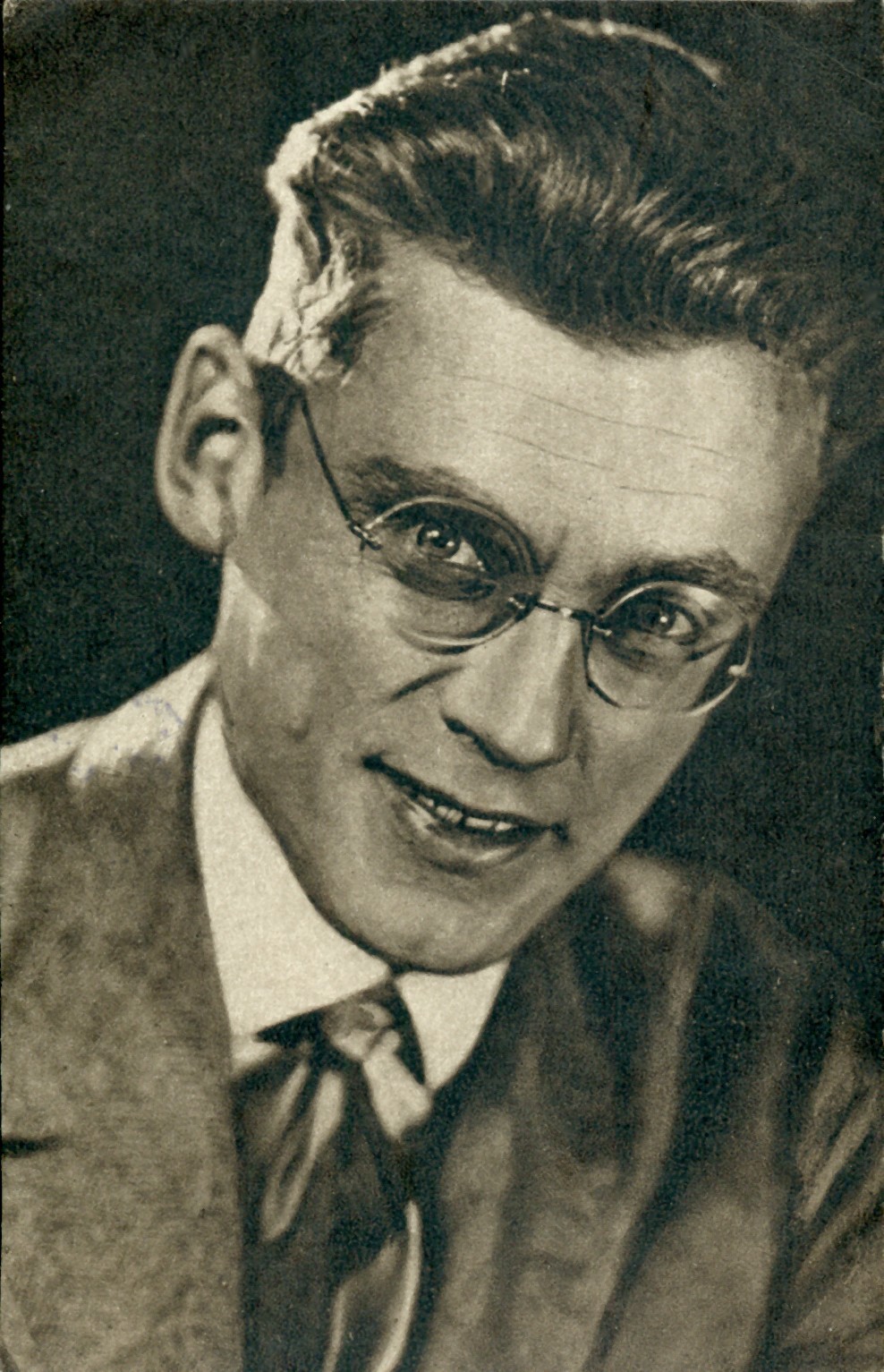
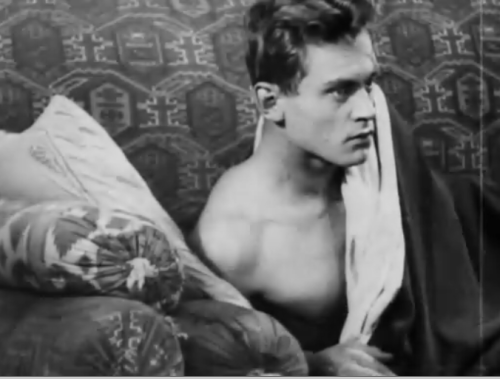
Next in our series is a visit to the darker side of Hollywood. This entry is going to cover Vladimir Fogel, Tom Forman, Evelyn Nelson, and Valdemar Psilander. These for all sadly committed suicide before they ever could appear in a talkie.


Vladimir Fogel was born sometime in 1902 in Moscow, Russia. 

I don't know anything about his early life. What I do know about him begins when he was in college and enrolled at the Institute of Cinematography. One of his teachers was a well known Russian director, Lev Kuleshov who immediately took to Vladimir and gave him his big break. 

Vladimir made his screen debut in the 1924 film, The Extraordinary Adventures of Mr. West in the Land of the Bolsheviks (got all that?). 

His film career only lasted for four years with about thirteen titles under his belt. The only well known costar I could find of his (or one that at least made a crossover to Hollywood that I recognized) was Anna Sten who he appeared with in two films. 

He was quite popular during his short career, and his good looks were not a small part of that popularity. His looks worked well with his choice in roles, the edgier the better!

He made his last screen appearance in the 1928 film, Salamandra. 


Vladimir Fogel passed away on June 8, 1929 in Moscow. He was 26 years old. Apparently he had been suffering from depression since the previous year and had proceeded to get worse. He ended up committing suicide by gunshot (I could have sworn I read that is how it happened, but I can't remember where I found that out). 

He was interred at the Donskoi Monastery Cemetery in Moscow.

Good news for silent film fans, a lot of his work survives and is available for viewing. Yay!!

He was sometimes credited as "V.P. Fogel" in his films, which stood for Vladimir Pavlovich Fogel.


As you can see, there isn't a lot of information out there about Vladimir, I don't even know the exact date he was born. I wanted to include him though because he was an early screen idol in Russia and I believe he definitely deserves to be remembered. Especially if a lot of his work survives!


************************************


Tom Forman was born on February 22, 1893 in Mitchell County, Texas. I exhausted myself looking up census information on Tom and I THINK I found his record, but I am not 100% sure that it is him. From what I have found, I believe his parents names were Joseph/Josiah and Mary Forman. Again, this isn't set in stone, this is just based off one record I found that had some information that lined up.

Just like the former entry about Vladimir Fogel, I don't know anything about his early life. I believe he moved to California after college with his parents because they did in fact live there as well while their son was making pictures. 

He made his film debut in the 1913 short, The Treachery of a Scar.


His career lasted for over ten years and consisted of over sixty film appearances, which is quite a feat. Also factor in that during this time he also was sent overseas to fight when WWI broke out. 

Some of his costars at the time included May Allison, Ina Claire, Noah Beery, and Gloria Swanson. 

On top of being an actor, Tom also worked as a director, directing his first film short in 1914 after being in the business for a few months. Some of the films he directed include Shadows (1922) starring Lon Chaney, The Virginian (1923) starring Kenneth Harlan and Florence Vidor, and The Crimson Runner (1925) starring Priscilla Dean and Alan Hale. Tom also worked as a writer on seven films beginning in 1915. 

After 1923 his career begin to slightly falter. It seemed he had reached his high point with The Virginian and after that he began working in poverty row films just to keep paying the bills. 

Tom was hired by Columbia studios in 1926 to direct their new film, The Wreck. A date to start filming was set and everything seemed to be on the up and up. Alas, it was not to be.


Tom Forman passed away on November 7, 1926 at his parent's home in Venice, California. He was 33 years old. 

He was buried at Hollywood Forever Cemetery. His grave marker reads "Lieut. Tom Forman." 

Tom was married once, but I do not know from when to when. Her name was Mary Mersch, and she was also an actress. The couple supposedly had a child together, but again, do not know when or even the gender. 

He was the first cousin of actress, Madge Bellamy but I don't know where the link is. 


*****************************************


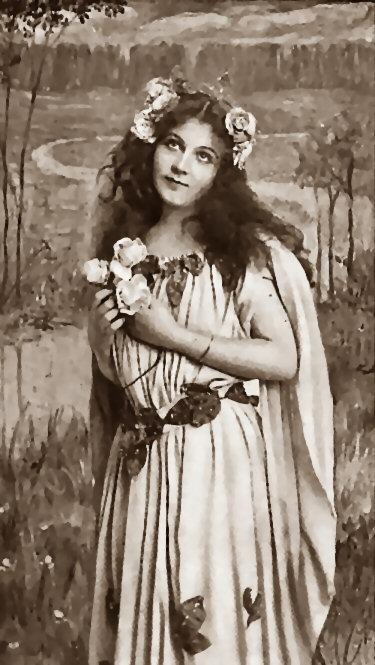
Evelyn Nelson was born on November 13, 1899 in Chloride, Arizona. She was the second daughter born to William and Georgia Nelson. Her sister, Pauline was a year older. 

She made her screen debut in the 1920 Charley Chase directed short, Don't Park Here. 

In the span of three years, Evelyn appeared in about twenty films. One of her more well known costars included Oliver Hardy who she starred with in five of her earlier films. This was back when he was credited on screen as "Babe Hardy." She seemed to be a wonderful comedic actress.

Her last film appearance was in 1923's Desert Rider.

Evelyn and her frequent costar Jack Hoxie 

Evelyn Nelson passed away on June 16, 1923 in Los Angeles. She was just 23 years old. It had been days since anyone had seen or talked to Evelyn. She lived with her mother at the time, but her mother was out of town visiting relatives. When she returned home, she found her daughter lying dead in a gas filled room in their house. Two notes were found in the room, one talked about how she was tired and so she wanted to end her life. The second note was very interesting, it read: "I am just about gone and will soon be with my friend Wally." The "Wally" in the letter was Wallace Reid who had died in January of that year after struggling with addiction to morphine. I do not know where she is buried.

***************************************


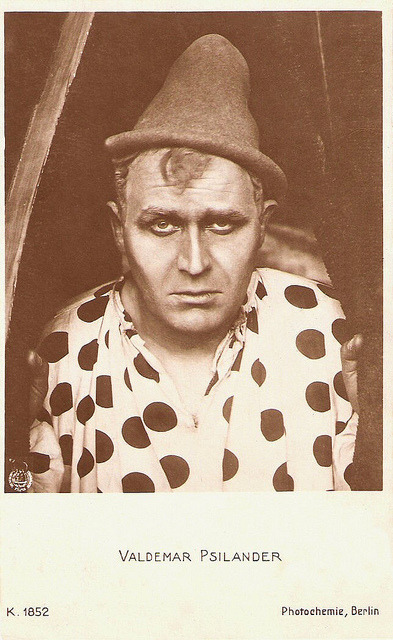
Valdemar Einar Psilander was born on May 9, 1882 in Copenhagen, Denmark. 

When he was a teenager he began working at a theater in his hometown and appeared in various plays.

He made his screen debut as the title character in a 1910 version of The Portrait of Dorian Gray.

Valdemar made a big splash right away in the European film industry. He was voted the favorite male movie star in a magazine poll after only being in films for two years! He was very popular in his home country of Denmark as well as Germany, Russia, Hungary, and even as far as Brazil! He was in high demand, and it shows when you look at his body of work. Over 80 films in a span of 10 years! 

His last film appearance was in 1917's Hjertekrigen paa Ravnsholt. 


Valdemar Psilander passed away on March 6, 1917 in Copenhagen, Denmark. He committed suicide at age 32. 

He was buried at the Taarbaek Cemetery in Copenhagen. 

I have read that there was perhaps more drama that unfolded after Valdemar died.  

 Apparently the founder of Nordisk Film, Valdemar's home studio for over six years, managed to get a hold of Valdemar's body, moved it to his dressing room on the sound stage and made it look like he had been shot in a lover's quarrel. The press and movie fans alike ate up the story and Nordisk made a killing when they released over ten additional films featuring Valdemar posthumously. Apparently the dressing room where this whole scene took place is still intact and can be seen through a tour of the studio. Pretty cool.

Valdemar was married once, to Edith Buemann, and I am not sure of when they were married or if they were still in fact married at the time of his death.

Valdemar and equally famous screen star, Asta Nielsen.

"...One can perhaps learn to become an actor but you can never learn to be filmed. Studied emotions on film become artificial and false. Film relentlessly demands truthfulness and sincerity." ~~ Valdemar Psilander 

Tuesday, July 23, 2013

No Talkies: Part II

Next we move on to four silent actors who were taken from the world because of pneumonia: Florence Barker, Ward Crane, Jack Standing, and Emily Stevens.

Let us proceed...


Florence Barker was born on November 22, 1891 in Los Angeles, California. She was the first of four daughters and a son born to William, a farmer, and his wife, Hattie. Sister Bertha was born two years later, then Nellie, brother Leigh, and Daisy.

As a child, Florence appeared in plays for her community theatre and for school. When she was eighteen years old, she was becoming the star of the plays and performing in famous venues in Los Angeles. It was around the same time that she began her film career as well.

Florence made her screen debut in the 1908 short, An Awful Moment, which also featured her friend, Florence Lawrence (There was actually a Florence trifecta in play! Barker, La Badie, and Lawrence!).

Her film career spanned only about four years but within those four years she made over 70 films. Most of the films she appeared in were shorts because this was from 1908 to 1912, this was still early days in the film industry. During her career she had the chance to act alongside such stars as Henry B. Walthall, Hoot Gibson, Mack Sennett, and all three of the Pickford siblings (Mary, Lottie, and Jack). 

As an actor with the Biograph Company, Florence appeared in the Priscilla serials playing the lead character. Episodes in this serial included Priscilla and the Umbrella (1911), Priscilla's Engagement Ring (1911), and Priscilla's Capture (1912).

Florence Barker passed away on February 15, 1913 from pneumonia in Los Angeles. She was just 21 years old. 

I am not sure where Florence is buried, but I am assuming it is in Los Angeles since that is where she was born and where she died. 

"Miss Florence Barker, whose charming personality and genius challenged the admiration of theatrical cities and won the hearts of her audience everywhere, succumbed to an acute attack of pneumonia and died..." ~~ L.A. Times - February 16, 1913


******************************************


Ward Crane was born on May 18, 1890 in Albany, New York. He was the only son of John, a railroad engineer, and his wife, Alida. 

His career aspirations growing up did not include the stage, but they did include a dais of sorts. He began to work in government jobs as a stenographer and as a secretary to the then Governor of New York. When said governor was impeached and forced to resign from his position, Ward ended up joining the Navy and was transferred to San Diego, California. 

While stationed in California, Ward met a few actors who were visiting the base and they told him that he was good looking guy and he should be in the pictures!

Ward made his film debut in 1919 in The Dark Star, which starred Marion Davies. Not a bad way to start! He had a great career alongside such big names as Wallace Beery, Anna Q. Nilsson, Anita Stewart, Barbara La Marr, Billie Burke, Mae Murray, Norma Talmadge, Lew Cody...the list keeps going!

I can't speak for back then, but in this day his most well known role was in the 1924 Buster Keaton film, Sherlock Jr. Ward was the bad guy that you hissed at on the screen. *hissssss* The following year he played the villain in another smash hit, The Phantom of the Opera, starring Lon Chaney.

His last film appearance was in the 1928 film, The Rush Hour with Marie Prevost and Harrison Ford.


Ward, Kathryn McGuire, and Buster Keaton

Ward Crane passed away on July 21, 1928 in Saranac Lake, New York. He was only 38 years old when he was diagnosed with pneumonia and died three months later. I am not sure where he is buried, but I am assuming it is in New York.

From what I have read, Ward never married. He was once rumored to be engaged to Irene Castle who he starred with in the movie French Heels. When he was asked about his relationship by a reporter in 1923, all he had to say was, "Nothing to it!" Straight shooter that man.

According to a 1920 article in Photoplay, Ward enjoyed driving his car around California. 

According to another Photoplay article that was written after his death, Ward had been in love with Marie Prevost for years. It was said to have been a huge blow when he found out that Marie had briefly reconciled with her husband, Kenneth Harlan. 


**************************************


Jack Standing was born on February 10, 1886 in London, England, United Kingdom. He was one of six sons born to actor Herbert Standing and his wife, Emily. Jack's three older brothers, Guy, Percy, and Wyndham, were also actors. 

Obviously the acting bug was already in his genes, so it wasn't long before he was appearing on stage like his father and brothers. Jack was actually part of the Broadway production of Floradora for a brief period of time. 

Jack made his film debut in a 1911 short called A Good Turn which starred Florence Lawrence. 

In a span of about seven years, Jack appeared in over 50 films, mostly for the and Lubin film company. His costars in his films included names like William S. Hart, Louise Glaum, Miriam Cooper, Gladys Brockwell, and Henry B. Walthall. 

Jack was lucky when it came to film roles because he wasn't type casted. He sometimes played the dashing love interest and he sometimes played the evil villain. 

His last film appearance was in With Hoops of Steel which was made in 1917 but was released posthumously in 1918.

Jack Standing passed away on October 25, 1917 in Los Angeles. He succumbed to pneumonia at age 31. 

I believe he was interred at Green Hills Memorial Park in Rancho Palos Verdes, California. 

Jack was married once, and for some reason I can't seem to find much information on who she was or when they married. I believe her name was Janet though because there is a woman by that name buried next to the Jack Standing buried in the Green Hills Memorial Park. Their son, Jack Standing Jr. was born in 1914 and may have appeared in some of his father's films when he was a baby. 

**********************************


Emily Stevens was born on February 27, 1882 in New York City. She was the daughter of theatrical manager, Robert Stevens and his wife, Emma. 

Acting was already in Emily's genes from the get go. Her first cousin was actress, Minnie Maddern Fiske and her father had worked as a manager in the theatrical circuit for years. 

Emily went to school in New Jersey and after she graduated, she trained with her cousin to prep her for her stage debut in 1900. Over the years, the reviews of her performances got better and better. People were noticing that she didn't seem as nervous and didn't feel the need to over act as much anymore. 


She made her screen debut in 1915 as the title character in Cora. During the course of five years, Emily appeared in about 15 titles, acting alongside such names as King Baggot, Muriel Ostriche, Evelyn Brent,  and Harry Davenport. 

While she made a big splash on the stage, she didn't make a huge impact on the silver screen. Emily started acting in the movies at age 33 and was considered 'too old' for most companies so she wasn't in very high demand. The theatre remained her true bread and butter. 

Her last film appearance was in 1920's The Place of the Honeymoons. After that, she went back to the stage and continued in appearing in such plays as "Hedda Gabler" by Ibsen. 


Emily Stevens passed away on January 3, 1928 in New York City at the age of 45. 

Eventually the cause of death was listed as pneumonia but there was plenty of drama and conjecture going on before that diagnosis was finally made. Apparently before her death, Emily had suffered a nervous breakdown and had been under the care of a doctor for almost a year. Her doctor was treating her with shots to sedate her, and at first he believed that she could have possibly taken an overdose of said drugs. He later concluded that the drugs may have put her into a coma and during this state she developed pneumonia and that is what caused her death. 

Emily was taken to New Jersey where she was cremated. 

Emily never married but she did pine for the same man for most of her life, the husband of her cousin Minnie Maddern Fiske, Harrison Fiske. She never pursued him and never turned her attention to any other men. Talk about devotion!

I found a New York Times article from 1920 that talked about Emily not being able to make a stage performance because she was suffering from a "slight nervous breakdown." How does one have a 'slight' nervous breakdown???